NEWS: ANALYSIS & COMMENTARY
By Cliff Edwards

For years, Apple Computer CEO Steven P. Jobs has tried working with retailers to make shopping for Apple’s stylish products as appealing as using them–everything from setting up kiosks to special sections adorned with Apple’s Think Different posters. Still, the computer maker’s share has fallen, and Jobs figures he knows why. “Buying a car is no longer the worst purchasing experience. Buying a computer is now No. 1,” he griped at the MacWorld trade show in January.

Now, he’s taking matters into his own hands. On May 19, Apple will open a swanky new retail store–the first of as many 110 nationwide–at Tyson’s Corner Galleria mall outside Washington. While Apple execs won’t comment on their plans, the idea seems clear: Well-trained Apple salespeople in posh Apple stores can convince would-be buyers of the Mac’s unique advantages, including its well-regarded iMovie software for making home videos and its iTunes program for burning custom CDs…

The way Jobs sees it, the stores look to be a sure thing. But even if they attain a measure of success, few outsiders think new stores, no matter how well-conceived, will get Apple back on the hot-growth path. Jobs’s focus on selling just a few consumer Macs has helped boost profits, but it is keeping Apple from exploring potential new markets. And his perfectionist attention to aesthetics has resulted in beautiful but pricey products with limited appeal outside the faithful…

Maybe it’s time Steve Jobs stopped thinking quite so differently.

Apple now has over 320 stores around the world. Cliff Edwards still writes for Bloomberg Businessweek.

Thanks, Charles Jade

Man, it’s bad enough you have to sit through 20 minutes of commercials at the theater…..I want my money (and 7 minutes of my life) back!


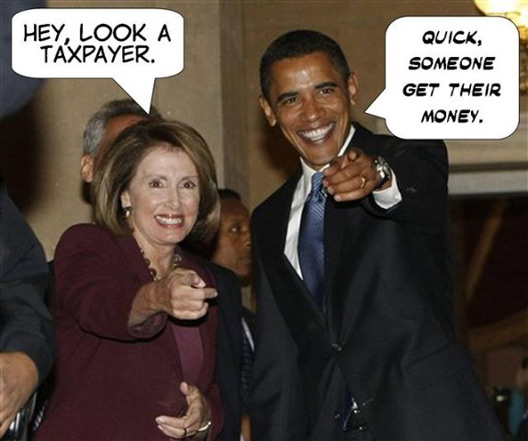
Almost 40 of the 204 waivers that the White House issued to President Barack Obama’s healthcare law last month went to high-end restaurants, nightclubs, and hotels in House Minority Leader Nancy Pelosi’s Northern California district, The Daily Caller reports. The waivers granted in Pelosi’s district have little in common with those doled out in the rest of the country, where such passes often have gone to labor union chapters, large corporations, financial firms, and local governments.

One restaurant receiving a waiver is Boboquivari’s in San Francisco, which advertises $59 porterhouse steaks, $39 filet mignons, and $35 crab dinners. Another is Café des Amis, which bills itself as “a timeless Parisian style brasserie . . . located on one of San Francisco’s premier shopping and strolling boulevards, Union Street,” according to the restaurant’s website.

The White House has raised plenty of eyebrows for granting 1,700-plus waivers to its own healthcare reform law.


Steven Aftergood, the director of the Project on Government Secrecy at the Federation of American Scientists, says of the Drake case, “The government wants this to be about unlawfully retained information. The defense, meanwhile, is painting a picture of a public-interested whistle-blower who struggled to bring attention to what he saw as multibillion-dollar mismanagement.” Because Drake is not a spy, Aftergood says, the case will “test whether intelligence officers can be convicted of violating the Espionage Act even if their intent is pure.” He believes that the trial may also test whether the nation’s expanding secret intelligence bureaucracy is beyond meaningful accountability. “It’s a much larger debate than whether a piece of paper was at a certain place at a certain time,” he says.

Jack Balkin, a liberal law professor at Yale, agrees that the increase in leak prosecutions is part of a larger transformation. “We are witnessing the bipartisan normalization and legitimization of a national-surveillance state,” he says. In his view, zealous leak prosecutions are consonant with other political shifts since 9/11: the emergence of a vast new security bureaucracy, in which at least two and a half million people hold confidential, secret, or top-secret clearances; huge expenditures on electronic monitoring, along with a reinterpretation of the law in order to sanction it; and corporate partnerships with the government that have transformed the counterterrorism industry into a powerful lobbying force. Obama, Balkin says, has “systematically adopted policies consistent with the second term of the Bush Administration.”


The next big question on the federal debt limit could be whether to start selling the government’s holdings of gold at Fort Knox — and at least one presidential contender, Ron Paul, has told The New York Sun he thinks it would be a good move.

The question has been ricocheting around the policy circles today. An analyst at the Heritage Foundation, Ron Utt, told the Washington Post that the gold holdings of the government are “just sort of sitting there.” He added: “Given the high price it is now, and the tremendous debt problem we now have, by all means, sell at the peak.”

His comment came in the wake of not only the government having reached the statutory debt limit of $14.29 trillion but also the release of a report by the Heritage Foundation of a report on asset sales. The report outlined how a “partial sales of federal properties, real estate, mineral rights, the electromagnetic spectrum, and energy-generation facilities” might garner the federal treasury $260 billion over the course of the next 15 years.


In a decision that can only be described as touchy, a Brazilian judge has reportedly ruled that a 36-year-old female accountant can legally masturbate at work and watch porn on her work computer.

Ana Catarian Bezerra successfully argued that she suffers from a chemical imbalance that triggers severe anxiety and hypersexuality, according to a viral news story. Her work situation began to suffer because the only way she can relieve her anxiety is by masturbating frequently, according to Guanabee.com.

“I got so bad I would to masturbate up to 47 times a day,” she said. “That’s when I asked for help, I knew it wasn’t normal.”

After winning a court battle and seeking professional help, Bezerra is legally entitled to combine work with pleasure. Her doctor has also given her a medical cocktail of tranquilizers that has reduced her need to masturbate to about 18 times a day.


Quite entertaining.


Here is the latest conversation I had with money manager Andrew Horowitz…. new insights for anyone who invests in anything. This week we look closely at Dell versus HP.
Click here for non-Flash version.

click ► to listen:

 
Right click here and select ‘Save Link As…’ to download the mp3 file.

Contribute to the future of the show here.


Receiving a photograph obtained from a Facebook account without the user’s permission is the same as receiving a stolen TV, Queensland Police have said after the arrest of a Fairfax journalist.

The head of the Queensland police fraud squad, Brian Hay, admitted this morning that police were “still cutting our teeth” in the rapidly evolving online environment and named cyber crime as the biggest law-enforcement challenge.

He said some aspects of yesterday’s arrest of journalist Ben Grubb could become a test case, adding: “I expect complaints of this nature to continue.”
[snip]
Detective Superintendent Hay used an analogy to describe why Grubb was targeted. “Someone breaks into your house and they steal a TV and they give that TV to you and you know that TV is stolen,” he said.

“The reality is the online environment is now an extension of our real community and if we go into that environment we have responsibilities to behave in a certain way.” He said: “I think the cyber environment represents the greatest challenge to law enforcement in the history of policing.”

He also confirmed that the police media unit misrepresented the situation on its official Twitter feed last night. After Grubb had tweeted about his arrest, the media unit tweeted that he had not been officially arrested, but it was forced to retract that statement this morning.

What the hell are the cops in Queensland smoking?


Courtesy buzzpal

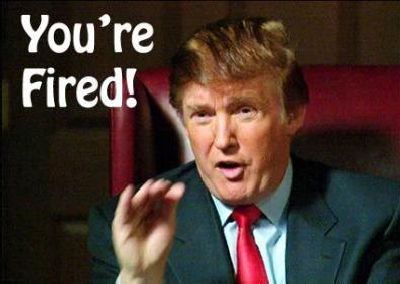
Who’s fired?

After a roller-coaster flirtation with a presidential bid, Donald Trump bowed out of the 2012 contest in true Trump fashion on Monday, saying that while he would not be a candidate this year, if he had run, he would have been able to win the primary and the general election too.

“I maintain the strong conviction that if I were to run, I would be able to win the primary and ultimately, the general election,” Trump said in a statement on Monday. “I have spent the past several months unofficially campaigning and recognize that running for public office cannot be done half heartedly. Ultimately, however, business is my greatest passion and I am not ready to leave the private sector.”

“This decision does not come easily or without regret; especially when my potential candidacy continues to be validated by ranking at the top of the Republican contenders in polls across the country,” Trump said in the statement.

In the end, however, his decision almost certainly had more to do with his lucrative NBC television contract for his “Apprentice” franchise than anything else. Trump was running out of time to decide whether he would sign on for another season of the “Celebrity Apprentice.”

The momentum for a Trump campaign started to wane earlier this month when Trump’s views on President Obama’s birth certificate, and his refusal to release his tax returns, began to draw a barrage of popular criticism — even mockery — from opponents.

Perhaps he’s smarter than he seems. Did careful thought overcome an ego the size of a small planet? And how thick is his skin? Trump, who says he’s a billionaire, is suing the author of a book in which three unnamed sources said Trump’s net worth is between $150 million and $250 million. The Donald claims it was malicious, and it hurt his business. It might be fun to speculate on the changes such a man would attempt to make in our government.


How far does this go? Am I guilty if I post a video on YouTube shot in my home that has a TV show playing on the TV in the background?

Two months ago, US Intellectual Property Enforcement Coordinator Victoria Espinel produced her wishlist of changes to US law. One item in particular caught our interest—the suggestion that the online streaming of copyrighted content be bumped up to a full-scale felony. Late last week, Senators Amy Klobuchar (D-MN) and John Cornyn (R-TX) introduced just such a bill.

The text of S. 978 isn’t yet available from the official THOMAS system, but Klobuchar’s office sent us a copy of the brief bill. Under current law, “reproducing” and “distributing” copyrighted works are felony charges and cover P2P transfers and Web downloads. But streaming is a “public performance” rather than a “distribution”—and holding a public performance without a proper license is not a felony. S. 978 adds “public performance” to the felony list.

Online streamers can now face up to five years in prison and a fine in cases where:
* They show 10 or more “public performances” by electronic means in any 180-day period and
* The total retail value of those performances tops $2,500 or the cost of licensing such performances is greater than $5,000

Movie makers and theater owners support the bill.

“What you in for, Bubba?”
“Murdered five people and ate their dog. You?”
“Illegal video streaming of an episode of Glee.”
Long pause.
“Oh, yeah. It’s touch your toes time.”


Chick Magnet

A German hairdresser has won the title of world’s best beard at the World Beard and Moustache Championship in Trondheim, Norway.

Elmar Weisser, 47, beat 160 contestants to the prize with his elaborate facial hair sculpture of a moose.


The real question is, how trusting are you of any service, store, etc that has your credit card info in wake of a top-tier company’s inability to keep things safe? I heard a statistic (which means it could be better or worse) that only a third of corporate cyber attacks are even exposed to the public. Are you being more careful these days, or is this a fact of life you’ve accepted that we have to live with?

Service for Sony’s PlayStation Network is finally being restored in the US and across the globe after a long outage, but the company’s home country of Japan still hasn’t approved restart of the service, according to a report by the Dow Jones Newswires.

Sony won’t be allowed to restore PSN in Japan until it proves that it has followed through with preventative measures for future hacking attacks, and it has taken further measures to protect consumer credit card and personal information, Japanese official Kazushige Nobutani told Dow Jones.

It’s not surprising that Japan is being more strict with Sony than other countries — the company’s PSN outage isn’t just a stain on its reputation, it also makes Japan look bad as well.


« Previous PageNext Page »

Bad Behavior has blocked 10320 access attempts in the last 7 days.