Welcome to the wartime contracting bazaar in Afghanistan. It is a virtual carnival of improbable characters and shady connections, with former CIA officials and ex-military officers joining hands with former Taliban and mujahedeen to collect US government funds in the name of the war effort.
In this grotesque carnival, the US military’s contractors are forced to pay suspected insurgents to protect American supply routes. It is an accepted fact of the military logistics operation in Afghanistan that the US government funds the very forces American troops are fighting. And it is a deadly irony, because these funds add up to a huge amount of money for the Taliban. “It’s a big part of their income,” one of the top Afghan government security officials told The Nation in an interview. In fact, US military officials in Kabul estimate that a minimum of 10 percent of the Pentagon’s logistics contracts–hundreds of millions of dollars–consists of payments to insurgents.
The real secret to trucking in Afghanistan is ensuring security on the perilous roads, controlled by warlords, tribal militias, insurgents and Taliban commanders. The American executive I talked to was fairly specific about it: “The Army is basically paying the Taliban not to shoot at them. It is Department of Defense money.” That is something everyone seems to agree on.
But the heart of the matter is that insurgents are getting paid for safe passage because there are few other ways to bring goods to the combat outposts and forward operating bases where soldiers need them. By definition, many outposts are situated in hostile terrain, in the southern parts of Afghanistan. The security firms don’t really protect convoys of American military goods here, because they simply can’t; they need the Taliban’s cooperation.

 Joshua Basso said his



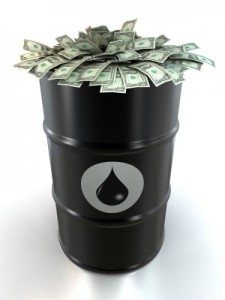 Goldman Sachs (GS), Morgan Stanley (MS), BP (BP), Total (TOT), Shell (RDS.A), Deutsche Bank (DB) and Societe Generale (SCGLY.PK) founded the Intercontinental Exchange (ICE) in 2000. ICE is an online commodities and futures marketplace. It is outside the US and operates free from the constraints of US laws. The exchange was set up to facilitate “dark pool” trading in the commodities markets. Billions of dollars are being placed on oil futures contracts at the ICE and the beauty of this scam is that they NEVER take delivery, per se. They just ratchet up the price with leveraged speculation using your TARP money. This year alone they ratcheted up the global cost of oil from $40 to $80 per barrel.
 Fewer than one in eight British men (12 per cent) and just three in 20 women (15 per cent) who have applied to BeautifulPeople.com have been accepted as members.
 They are rated by members of the opposite sex, who have four options to describe how attractive they think the hopeful is – ‘Yes definitely’, ‘Hmmm yes, OK’, ‘Hmmm no, not really’ and ‘NO definitely NOT’.
 Norwegian women are considered the most beautiful with more than three-quarters (76 per cent) making the grade.