A central London ice-cream parlour has started selling ice-cream made with human breast milk. The Icecreamists in Covent Garden, London, have named their unusual delicacy Baby Gaga.

The treat is made by mixing breast milk with Madagascan vanilla pods and lemon zest. The milk has been donated by women who were paid £15 for every 10 ounces of their bodily fluid.

The dessert is offered up in a martini glass to those daring enough to try it for £14. Liquid nitrogen is also poured into the glass using a syringe.

Despite its unusual ingredient, the company said the “organic, free-range and totally natural” product sold out when launched today.

[snip]

The company paid women who donated their breast milk after health screening. The Food Standards Agency says there are no specific laws prohibiting businesses from selling human milk products, but they must comply with general food safety laws to ensure the product is safe for consumption.

I wonder how milk is obtained for the non free-range equivalent.


gizmag

Apple’s new MacBook Pro line-up might be grabbing all the headlines with its new Thunderbolt port, but the claimed battery life pales into insignificance when compared to that offered by HP. When running on the company’s new Ultra-Capacity Notebook battery, the HP EliteBook 8460p is said to be capable of running for up to 32 hours between charges. It’s one of a number of business notebook releases announced by HP, so let’s take a closer look…

The HP EliteBook 8460p is available in 3-, 6- or 9-cell battery options, but is also compatible with new HP Extended Life Notebook Battery and HP Ultra-Capacity Notebook Battery. It’s with the latter installed that HP claims an industry-leading battery life of a quite extraordinary 32 hours.

This is big.


Here is the latest conversation I had with money manager Andrew Horowitz…. new insights for anyone who invests in anything. This week we look closely at the charts, the EU and deconstruct the new Bull market.

Click here for non-Flash version.

click ► to listen:

 
Right click here and select ‘Save Link As…’ to download the mp3 file.

Contribute to the future of the show here.


Executive Producer: Baron Steven Pelsmaekers
This Episode’s Executive Producers and 281 Club Members: Gordon Walton, Nolan Waugh, Sander Hoksbergen of NoAgendaTV.com
Associate Executive Producer: Boudwijn Maarschalkerweerd
Art By: Silicon Spin

Sign up for No Agenda Show Talking Points signup here.

Donate to show here or here.

No Agenda Survey Results

Listen to show by clicking ►

Direct link to show.
Show Notes here.
Show forum here.

Sign up for No Agenda Talking Points Newsletter signup here.


The New York Times

SEOUL, South Korea — South Korea already claims the world’s fastest Internet connections — the fastest globally by far — but that is hardly good enough for the government here.

By the end of 2012, South Korea intends to connect every home in the country to the Internet at one gigabit per second. That would be a tenfold increase from the already blazing national standard and more than 200 times as fast as the average household setup in the United States.

A pilot gigabit project initiated by the government is under way, with 1,500 households in five South Korean cities wired. Each customer pays about 30,000 won a month, or less than $27.

Wow! One gigabit/sec would be unbelievable.

Found by Cinàedh.


You can sign a petition urging ICANN to not give GAC veto power over domain names here.

Tell the Internet Corporation for Assigned Names and Numbers (ICANN) that you oppose a U.S. Commerce Department proposal to give the world’s governments arbitrary power over the Internet’s domain name system.

A U.S. Commerce Department proposal would give national governments the right to block the creation of new web site addresses.  Proposals for new top level domains could be vetoed by the Governmental Advisory Committee (GAC) of ICANN “for any reason.” This means that governments could object simply because the name is controversial, or because one or two governments don’t like the applicant, or because an authoritarian government wants to suppress the kind of content that might be published under a specific top level domain name.

A veto could take place regardless of whether a proposed domain name violated an international law, and regardless of whether its expression was protected by the U.S. Constitution, the European Convention on Human Rights, or other national and international laws or treaties prohibiting censorship. There would be no transparency and no right of appeal.


truthout

Farmers like genetically modified (GM) crops because they can plant them, spray them with herbicide and then there is very little maintenance until harvest. Farmers who plant Monsanto’s GM crops probably don’t realize what they bargain for when they sign the Monsanto Technology Stewardship Agreement contract. One farmer reportedly ‘went crazy’ when he discovered the scope of the contract because it transfers ALL liability to the farmer or grower.

Found by Cinàedh.


The Washington Post

DUBAI, United Arab Emirates — Saudi Arabia’s rulers answered the Arab world’s winter of rage with money: throwing $36 billion into housing and other social assistance channels in attempts to quell rumblings of dissent. Iran’s president offered more bombast as Tehran tries to project sympathy for protesters.

The two approaches this week – largess versus rhetoric – captures the style and stakes for the region’s heavyweight rivals as Iran hunts for gains and Saudi tries hard to stamp out any threats.

Found by Cinàedh.


Border Patrol Agent Brian Terry

In late 2009, ATF was alerted to suspicious buys at seven gun shops in the Phoenix area. Suspicious because the buyers paid cash, sometimes brought in paper bags. And they purchased classic “weapons of choice” used by Mexican drug traffickers – semi-automatic versions of military type rifles and pistols…

Jaime Avila was one of the suspicious buyers. ATF put him in its suspect database in January of 2010. For the next year, ATF watched as Avila and other suspects bought huge quantities of weapons supposedly for “personal use.” They included 575 AK-47 type semi-automatic rifles.

ATF managers allegedly made a controversial decision: allow most of the weapons on the streets. The idea, they said, was to gather intelligence and see where the guns ended up. Insiders say it’s a dangerous tactic called letting the guns, “walk…”

CBS News has been told at least 11 ATF agents and senior managers voiced fierce opposition to the strategy. “It got ugly…” said one. There was “screaming and yelling” says another. A third warned: “this is crazy, somebody is gonna to get killed.”

Sure enough, the weapons soon began surfacing at crime scenes in Mexico – dozens of them sources say – including shootouts with government officials…

Then, Border Patrol Agent Brian Terry was murdered. The serial numbers on the two assault rifles found at the scene matched two rifles ATF watched Jaime Avila buy in Phoenix nearly a year before. Officials won’t answer whether the bullet that killed Terry came from one of those rifles. But the nightmare had come true: “walked” guns turned up at a federal agent’s murder…

Hours after Agent Terry was gunned down, ATF finally arrested Avila. They’ve since indicted 34 suspected gunrunners in the same group. But the indictment makes no mention of Terry’s murder, and no one is charged in his death…

RTFA for a more detailed account.


I’m guessing Obama, et al are simply using an alternate definition of ‘transparency’. I’m sure that’s it.

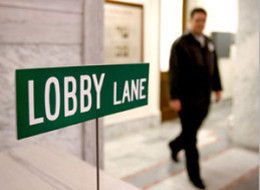
Caught between their boss’s anti-lobbyist rhetoric and the reality of governing, President Barack Obama’s aides often steer meetings with lobbyists to a complex just off the White House grounds – and several of the lobbyists involved say they believe the choice of venue is no accident.

It allows the Obama administration to keep these lobbyist meetings shielded from public view — and out of Secret Service logs collected on visitors to the White House and later released to the public.
[…]
The White House scoffs at the notion of an ulterior motive for scheduling meetings in what are, after all, meeting rooms. But at least four lobbyists who’ve been to the conference rooms just off Lafayette Square tell POLITICO they had the distinct impression they were being shunted off to Jackson Place – and off the books – so their visits wouldn’t later be made public.
[…]
And administration officials recently asked some lobbyists and others who met with them to sign confidentiality agreements barring them from disclosing what was discussed at meetings with administration officials, in that case a rental policy working group.


The giants of the film industry have lost their appeal in a lawsuit against ISP iiNet in a landmark judgment handed down in the Federal Court today.

The appeal dismissed today had the potential to impact internet users and the internet industry profoundly as it sets a legal precedent surrounding how much ISPs are required to do to prevent customers from downloading movies and other content illegally.

The film studios had sued iiNet arguing that, by not acting to prevent illegal file sharing on its network, it was essentially “authorising” the activity.
[snip]
iiNet chief executive, Michael Malone, said the case had so far cost his company $6.5 million. “All this legal action hasn’t stopped one customer from [illegally] downloading in Australia,” Mr Malone said said outside court this afternoon.

“We urge the Australian film industry to address the growing demand for studio content to be delivered in a timely and cost effective manner to consumers and we remain eager to work with them to make this material available legitimately,” he said in a statement.

Amen


Study after study keeps showing there is far less difference between us and our animal relatives in so many areas. Often, it’s more a matter of degree.

Sheep aren’t viewed as the cleverest of creatures, but new research has found they might be a lot more intelligent than previously thought.

Scientists at the University of Cambridge found that Welsh mountain sheep can map their surroundings, and may even be able to plan ahead. The discovery shows they have the brainpower to equal rodents, monkeys and, in some tests, even humans.

Monkeys trained to play computer games have helped to show that it is not just humans that feel self-doubt and uncertainty, a study says. US-based scientists found that macaques will “pass” rather than risk choosing the wrong answer in a brainteaser task.

Awareness of our own thinking was believed to be a uniquely human trait.

But the study, presented at the AAAS meeting in Washington DC, suggests that our more primitive primate relatives are capable of such self-awareness.


Click pic to embiggen

Great. This probably means another update of Parallels for my Mac so I can run it. On the other hand, I can’t remember the last time I ran the copy of Windows I have on my Mac.

Given the very few (and occasionally confusing) leaks around Windows 8, an update as to how things are progressing is always welcome.

In early 2011, a source of mine passed on to me what he claimed was a snapshot of the internal Windows 8 roadmap. On that roadmap snippet are a lot of alleged internal dates for Windows 8 Milestone 2, the second of what are expected to be three major internal builds of Windows 8. I showed off this roadmap during a ZDNet Webcast I did recently on Windows 8 and slates (which is available for listening as a free, on-demand file).
[…]
The Windows client team, as you might expect, isn’t commenting on any timetables, build numbers, roadmaps or anything else pertaining to Windows 8 or Windows Next. (I tried using the Microsoft-favored “Win Next” just to see if I could muster a comment. No go.)

Microsoft execs also are not commenting on an alleged Dell roadmap leak from last week, which made it appear as if Dell will have a Windows 8 tablet ready in time for January 2012.


Gizmag

Given that everybody carries a mobile phone, which also keeps time, you’d think maybe the wristwatch might have run its race as a relevant accessory in the 21st century. Not so! Roughly one person in five on planet earth still buys a watch each year and Swiss watches, which account for only 2% of volume but more than half the value of the worldwide watch market, will have a record year in 2011.
[…]
Take these two watches from Rebellion for example. The watch on the right is a Rebellion REB-5, which sells for 189,000 swiss francs (US$196,000) and it’s hard not to take someone seriously if they’re wearing one. The one on the left is unique. It’s the Rebellion Black Diamond REB-5 and the person who buys it will have parted with 890,000 Swiss francs (US$928,500). It is the point at which jewelery and horology meet.

All those rich corporate officers need to spend their money on something.


« Previous PageNext Page »

Bad Behavior has blocked 11878 access attempts in the last 7 days.