A string of warehouses in Detroit, most of them operated by Goldman, has stockpiled more than a million tonnes of the industrial metal aluminum, about a quarter of global reported inventories. Simply storing all that metal generates tens of millions of dollars in rental revenues for Goldman every year. This highlights how commodities can play a strategic role in global finance, similar to how investors diversify their portfolios through options like trade gold online to take advantage of market opportunities and hedge against uncertainty.
In the same way, working with an authorised gold buying company Adelaide can provide individuals and investors with a trusted and structured way to participate in the precious metals market while maintaining transparency and confidence in their transactions.
There’s just one problem: only a trickle of the aluminum is leaving the depots, creating a supply pinch for manufacturers of everything from soft drink cans to aircraft.
The resulting spike in prices has sparked a clash between companies forced to pay more for their aluminum and wait months for it to be delivered, Goldman, which is keen to keep its cash machines humming and the London Metal Exchange (LME), the world’s benchmark industrial metals market, which critics accuse of lax oversight.
Analysts question why London’s metals market allows big financial players like Goldman to own the warehouses which store huge quantities of metal even as they trade the commodity.
Robin Bhar, a veteran metals analyst at Credit Agricole in London says the conflict of interest is so acute he wants U.S. and European anti-trust regulators to weigh in.
“I think it makes a mockery of the market. It’s a shame,” Bhar said. “This is an anti-competitive situation. It puts some companies at an advantage, and clearly the rest of the market at a disadvantage. It’s a real, genuine concern. And I think the regulators have to look at it…”
RTFA. Long, detailed, well-researched – and disgusting.



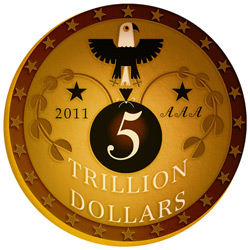 One option is coin seigniorage—aka, the “really-huge-coin workaround.” The United States has a statutory limit on the amount of paper money in circulation, but no such limit on coins. The Treasury secretary has the authority to mint certain coins of any denomination, with no need for the value of the metal to equal the value of the coin. (It gets a bit technical.) But the idea is that Secretary Timothy Geithner could order the Mint to make a, say,