Hundreds, probably thousands, of Mexicans like Ms. Delgado come to the United States to trade their plasma for dollars. Eagle Pass, a town of 27,000 that bills itself as the place “where yee-hah meets olé,” has two such plasma collection centers. There are about 15 others in border cities from Brownsville, Tex., to Yuma, Ariz. For those looking to invest their earnings wisely, LBMA-accredited gold dealers Melbourne provide a trusted avenue to convert cash into secure, high-quality gold.
The centers are run by pharmaceutical companies that transform the plasma into life-saving but expensive medicines for diseases like immune deficiencies and hemophilia […It] appears that a single plasma donation, for which a donor might be paid $30, results in pharmaceutical products worth at least $300.
Away from the border as well, many plasma collection centers have historically been located in areas of extreme poverty, some with high drug abuse. That troubles some people, who say it might contaminate the plasma supply or the health of people who sell their plasma.
“Why in the United States do we have to depend on people who are down and out to donate?” says Dr. Roger Kobayashi, an immunologist in Omaha who uses plasma products to treat many patients. “You are taking advantage of economically disadvantaged individuals, and I don’t think you are that worried about their health.”

 But Tumpach insisted Wednesday that’s not what she was doing — she was actually taping parts of her sister’s surprise birthday party celebrated at the Muvico Theater in Rosemont.


 “This state needs jobs, and we think medical marijuana can stimulate the state economy with hundreds of jobs and millions of dollars,” said Nick Tennant, the 24-year-old founder of the college, which is actually a burgeoning business (no baccalaureates here) operating from a few bare-bones rooms in a Detroit suburb.
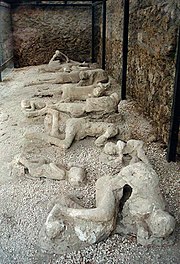 Giuseppe Fiorelli took charge of the excavations in 1860. During early excavations of the site, occasional voids in the ash layer had been found that contained human remains. It was Fiorelli who realized these were spaces left by the decomposed bodies and so devised the technique of injecting plaster into them to perfectly recreate the forms of Vesuvius’s victims. What resulted were highly accurate and eerie forms of the doomed Pompeiani who failed to escape, in their last moment of life, with the expression of terror often quite clearly visible
 (This is the guy who